
Play, risk and the power of place
Earlier this year, I had the opportunity to travel to Munich with Timberplay and Richter Spielgeräte for a few inspiring days exploring the relationship between play, landscape and design.
The trip brought together people from across the industry with a shared interest in creating better places for children to play. From visiting play spaces across Munich to exploring the Richter workshops and hearing from designers and play specialists, it was a great opportunity to step away from the day-to-day and think more deeply about what makes a truly successful play environment.
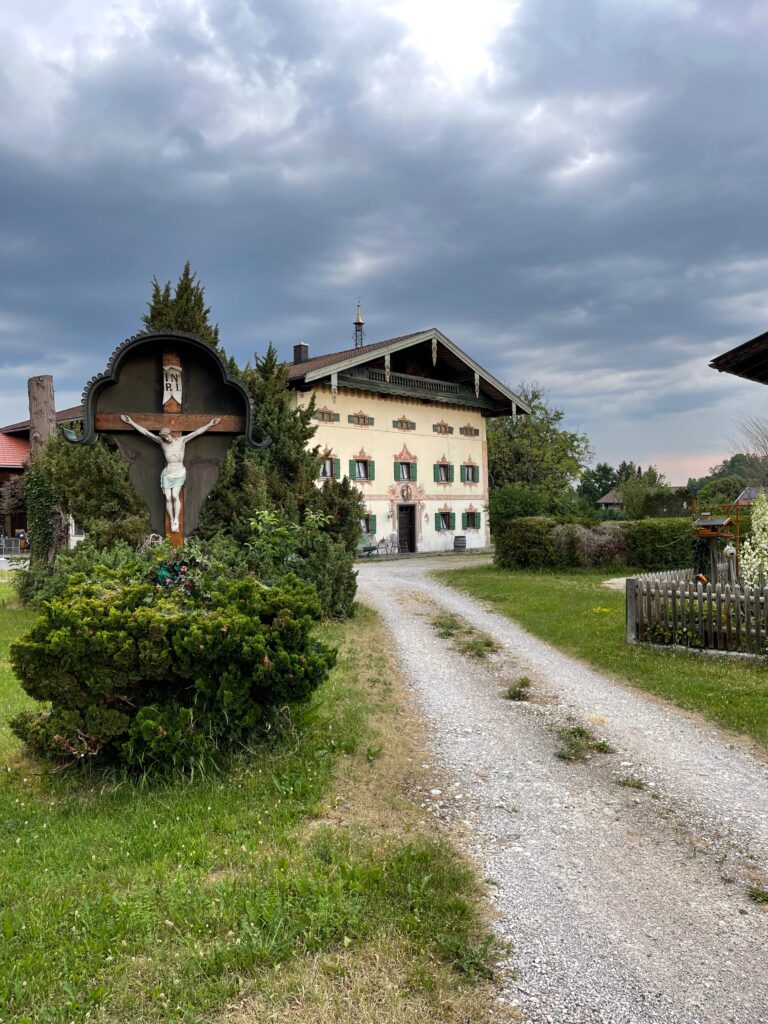
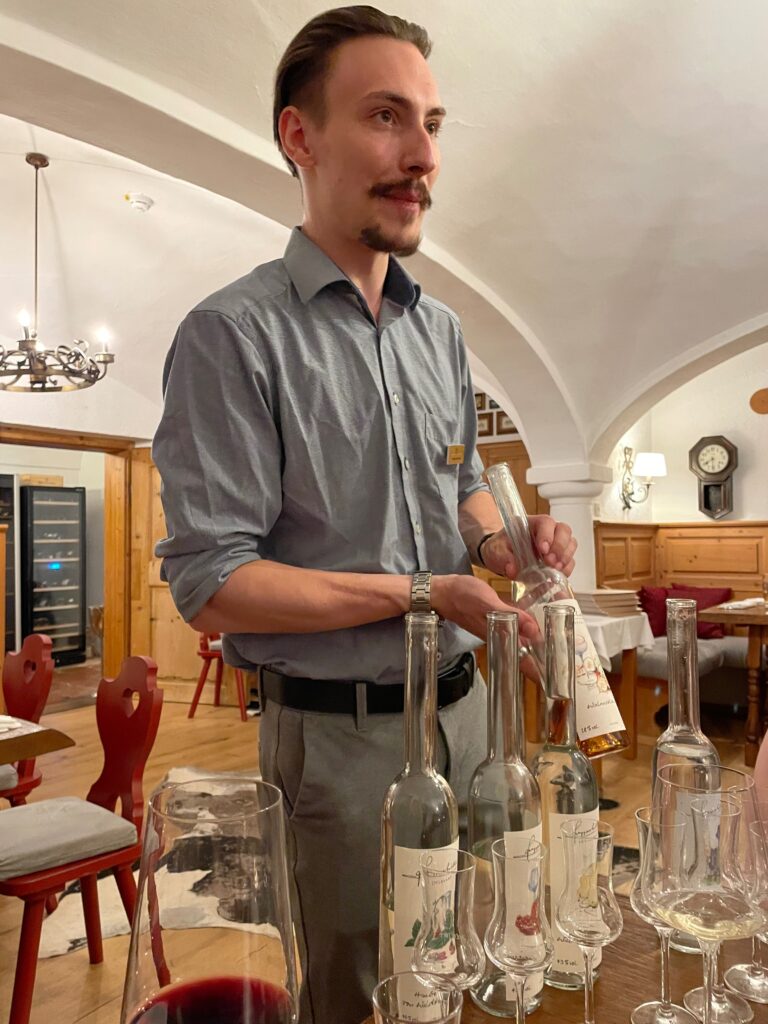
Our journey began with a coach transfer from Munich to Frasdorf. After settling into our traditional Bavarian hotel, we headed out for our first taste of Bavarian hospitality, with a fantastic traditional meal followed, as you might expect, by a selection of local schnapps. Enzian, a traditional Bavarian spirit made from gentian roots, was certainly an experience!
It was a great way to start the trip, with plenty of food, drink and conversation before the busy few days ahead.
Exploring play across Munich
The following day was spent travelling around Munich, visiting a variety of play settings and seeing how play can be integrated into different urban and landscape contexts.
What stood out to me was the variety of approaches. There was no single formula for successful play. Instead, the best spaces responded to their surroundings, making use of natural materials, topography, planting and water to create environments that felt unique to their setting.
This came through strongly during our time with Richter. Their approach is rooted in giving children the freedom to explore, experiment and make their own decisions. Play is not simply about providing equipment; it is about creating opportunities for children to interact with their environment and with one another.
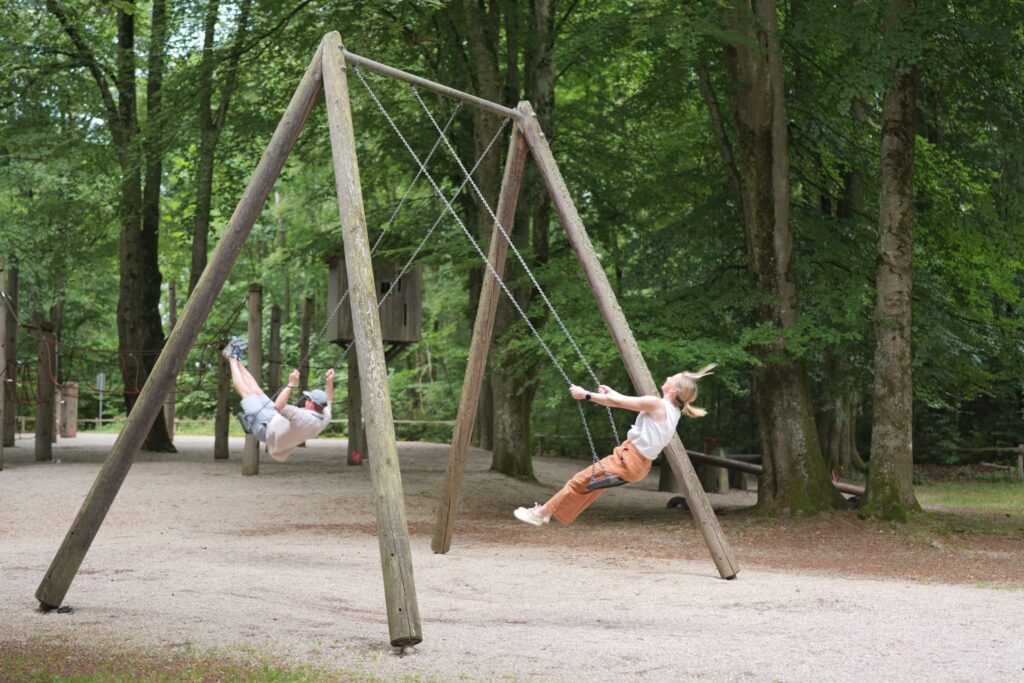
One of the standout spaces was Waldspielplatz Pöring, a huge forest playground set beneath the woodland canopy. Tall timber structures provided opportunities for climbing, swinging and activities that encouraged children to work together. It felt adventurous and challenging, while being completely embedded within its woodland setting.
It was here that one of the most interesting themes emerged and was evident throughout the trip: risk and challenge.
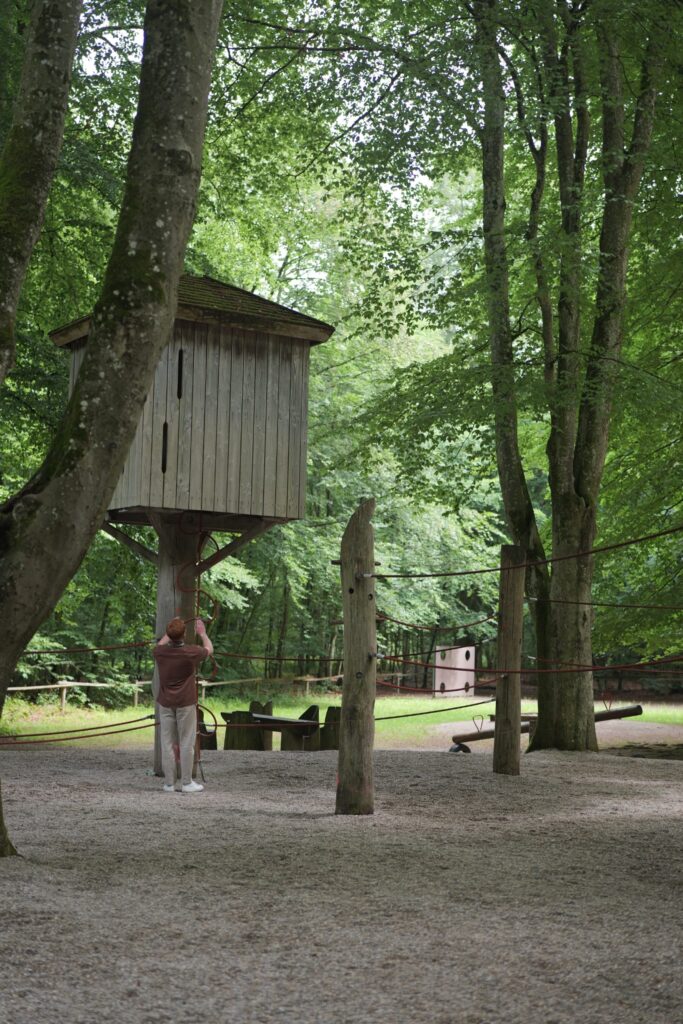
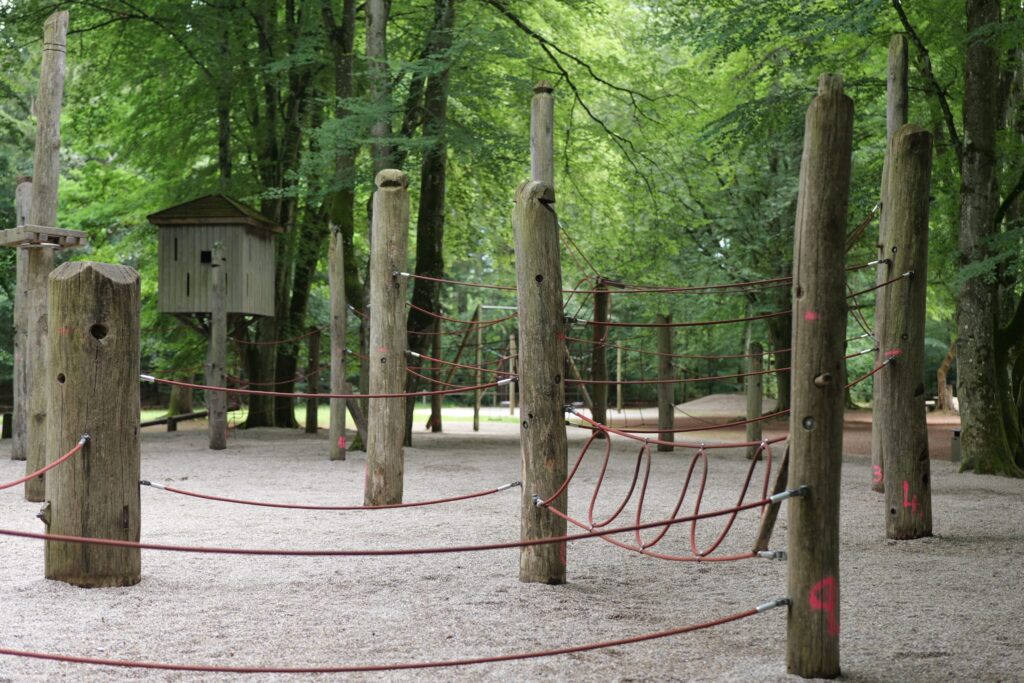
It is easy, particularly when designing public spaces, to focus heavily on removing risk. But without risk, there is little opportunity for children to learn how to assess situations, understand their own limitations and develop confidence.
The challenge is therefore not necessarily to remove risk, but to find the right balance between risk and benefit.
For designers, this is an important distinction. The most exciting play environments often allow children to make choices for themselves: deciding how high to climb, how fast to move, whether to take a particular route or how they want to interact with others.
When the landscape becomes the play
The role of the landscape is critical in enabling this. A mound can become a place to climb, run or roll. A change in level can create challenge. A collection of boulders can become a balancing route. Planting can create spaces for exploration and discovery.
When these elements are designed together, the landscape itself becomes part of the play experience rather than simply the setting around it.
This was something I found particularly interesting as a landscape architect. We often think about play as a defined space within a wider landscape, but the trip reinforced how much more successful these environments can be when play is allowed to spill out into the landscape and become part of the wider experience.
The power of water
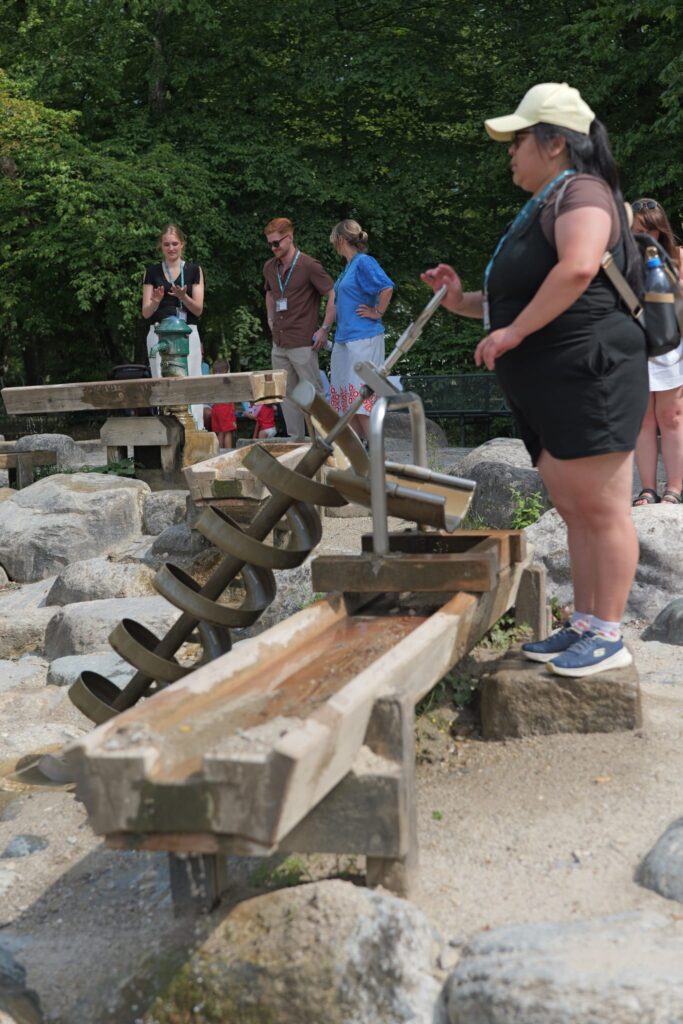
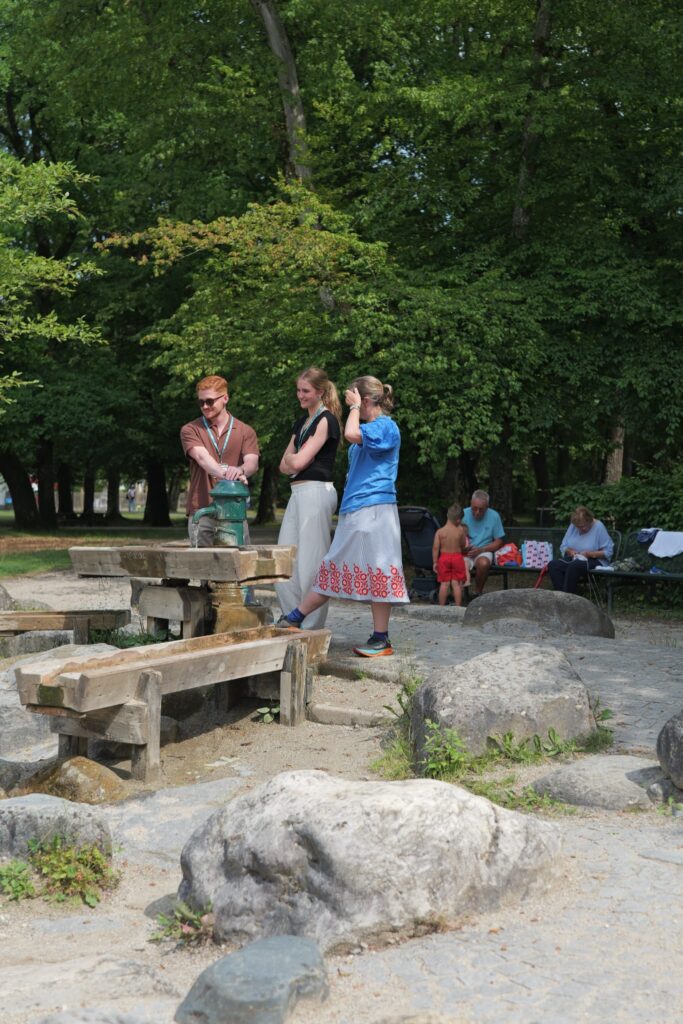
Water was another key theme of the trip and one that I found particularly fascinating. We visited a great example of water play within Grünwaldpark, where an engaging play space was attracting a good crowd of parents and children.
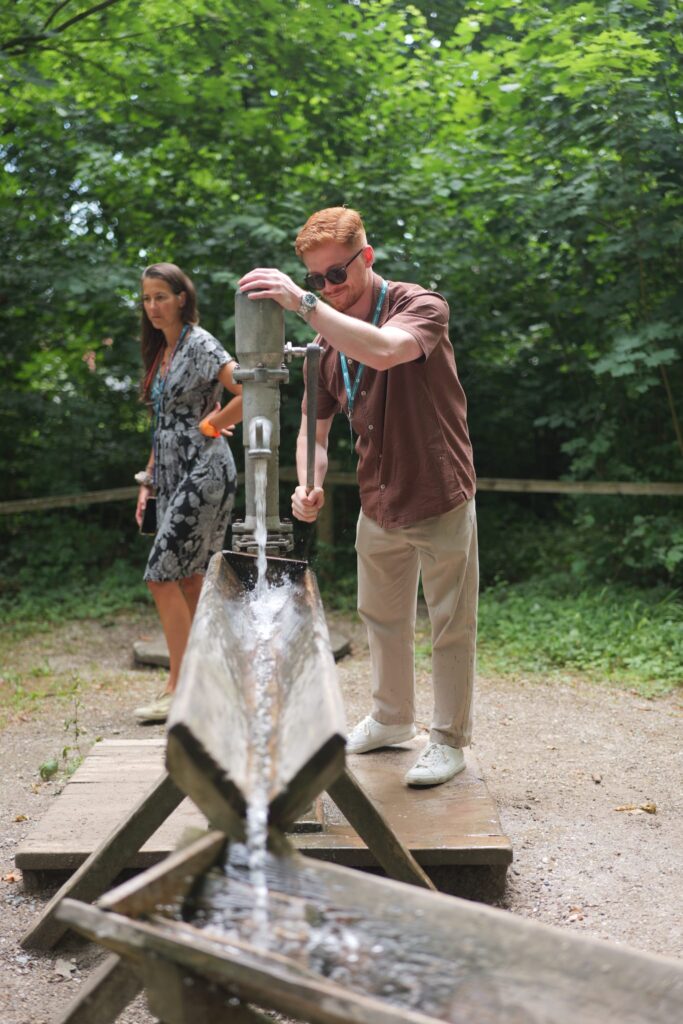
Water is an incredibly powerful play material because it is constantly changing. It can flow, move, collect, splash and disappear. Children can experiment with cause and effect, work together to redirect it and learn through trial and error. It can be social, physical and creative all at once.
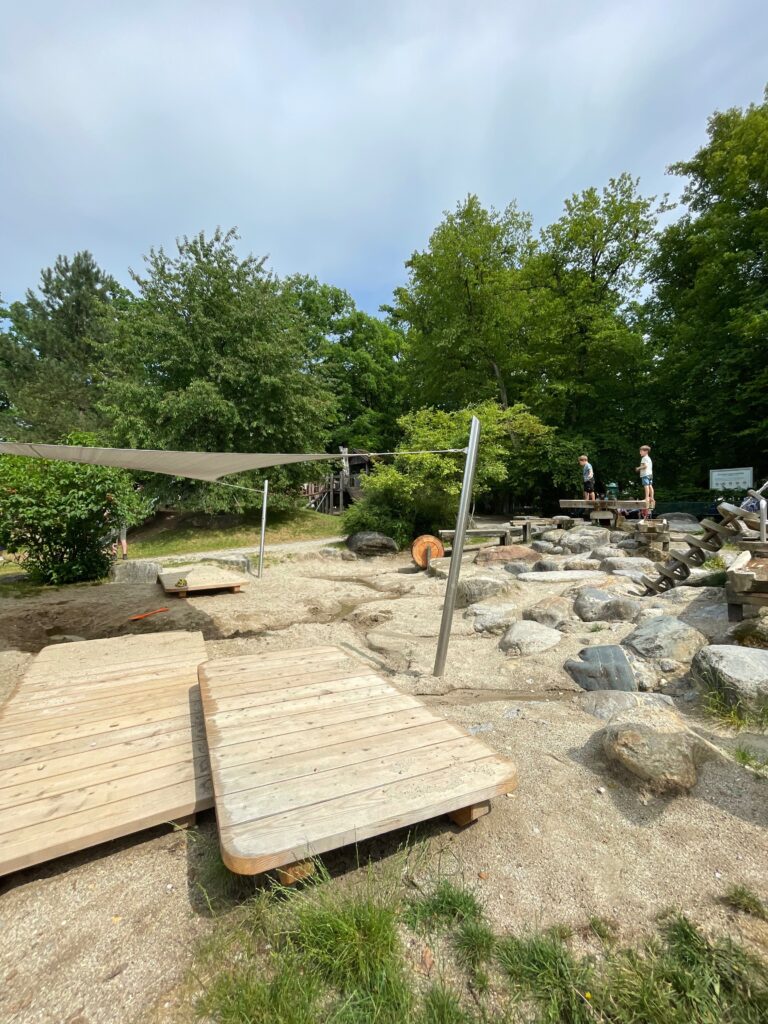
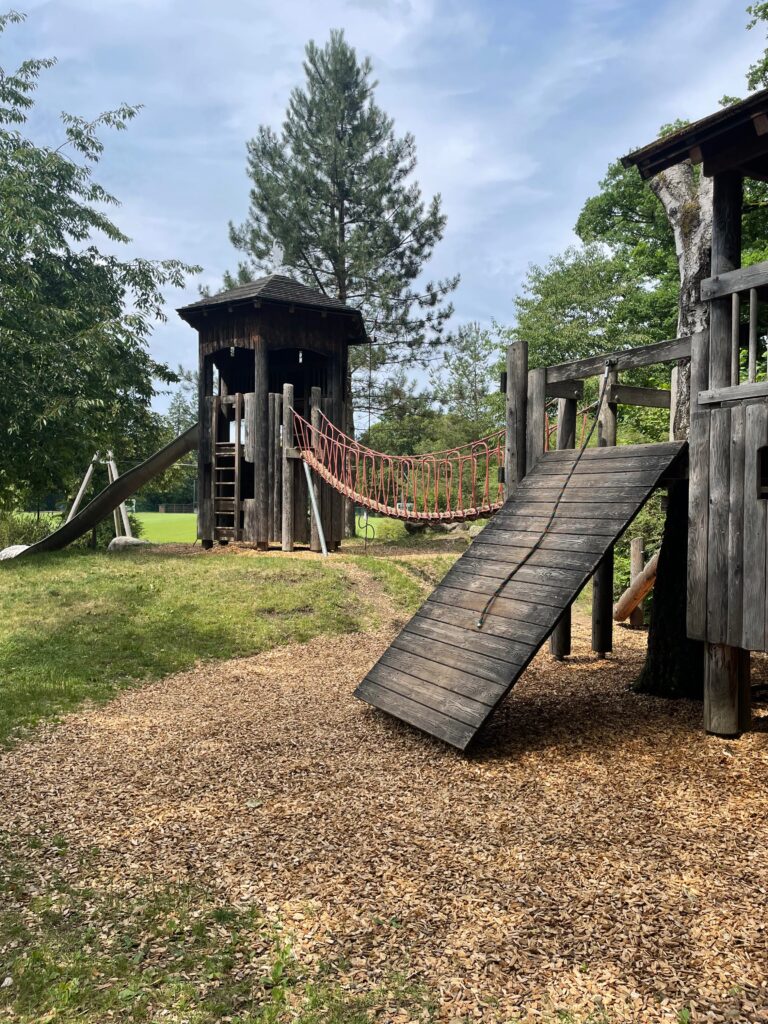
There was something particularly refreshing about seeing water treated as a genuine play material rather than something that needs to be carefully controlled and contained.
Of course, water also introduces an element of risk. As with play more broadly, the challenge is to understand and manage that risk without removing the qualities that make the experience valuable.
Designing for everyone
This links closely to another major theme from the trip: inclusion.
Inclusive play is not simply about ensuring everyone can physically access a piece of equipment. It is about asking three broader questions:
Can I get there?
Can I play?
Can I stay?
These questions encourage us to think about the whole experience, from the route into a space and the wayfinding, through to the variety of experiences available and the wider landscape around it.
True inclusion also means providing choice. Not every child needs to use a space in exactly the same way, but everyone should have opportunities to experience challenge, freedom, independence, sensory stimulation and social interaction in ways that work for them.
This is particularly relevant to landscape architecture. Seating, shade, planting, paths, topography and places to pause can be just as important as the play equipment itself.
Behind the scenes at Richter
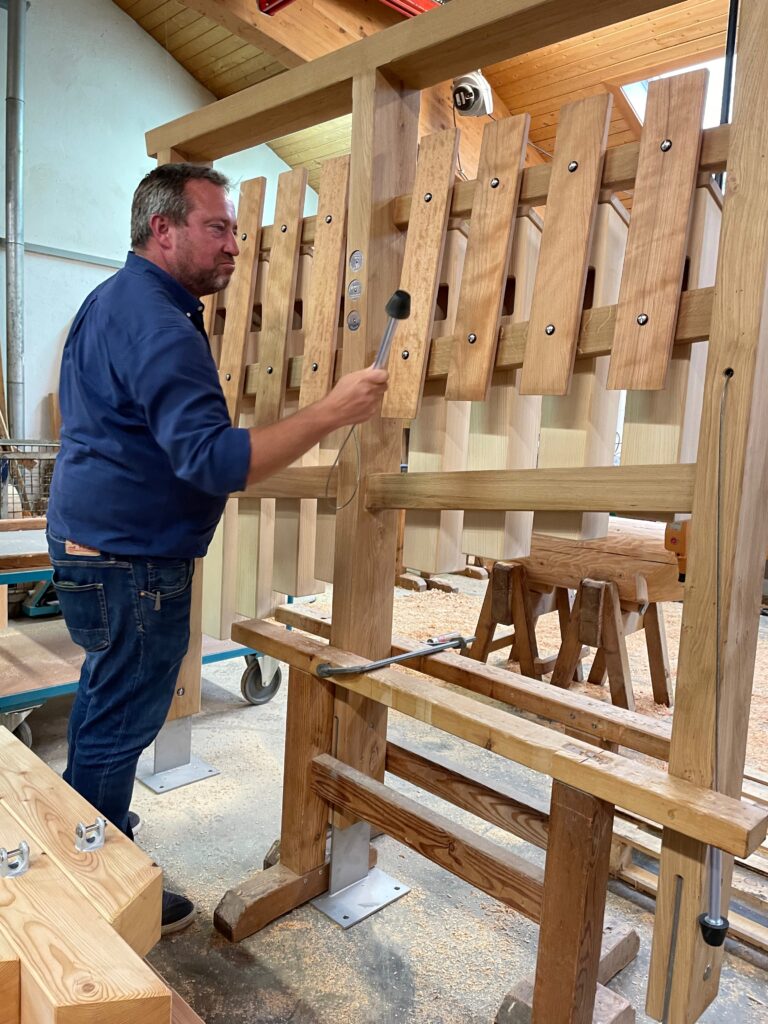
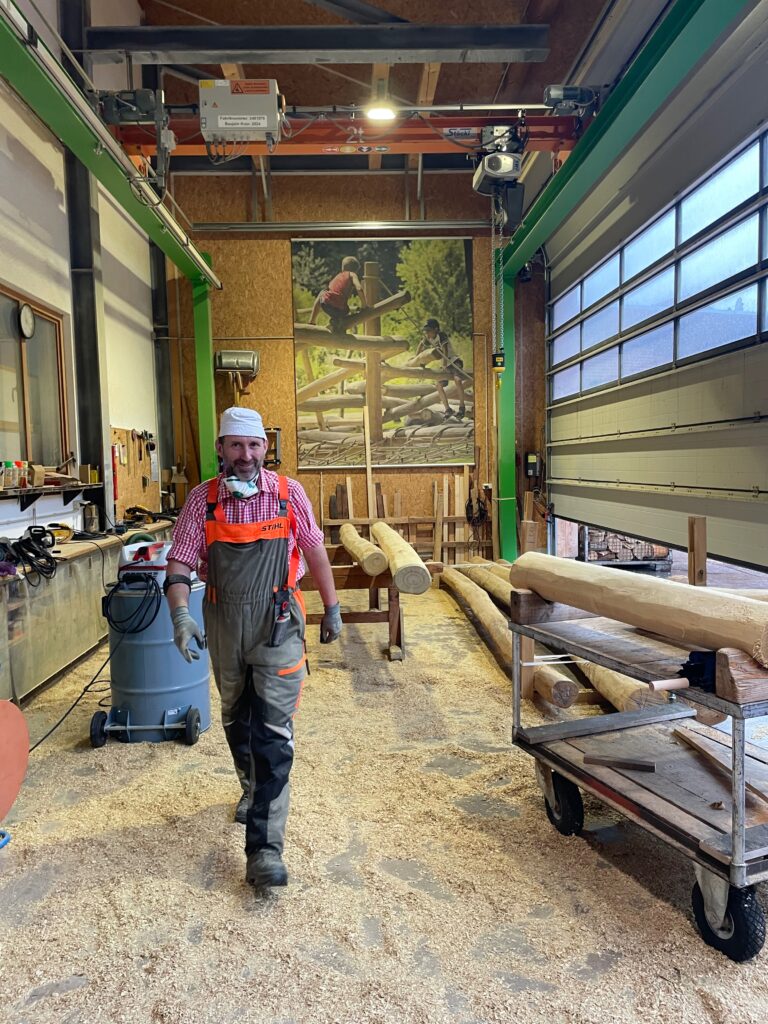
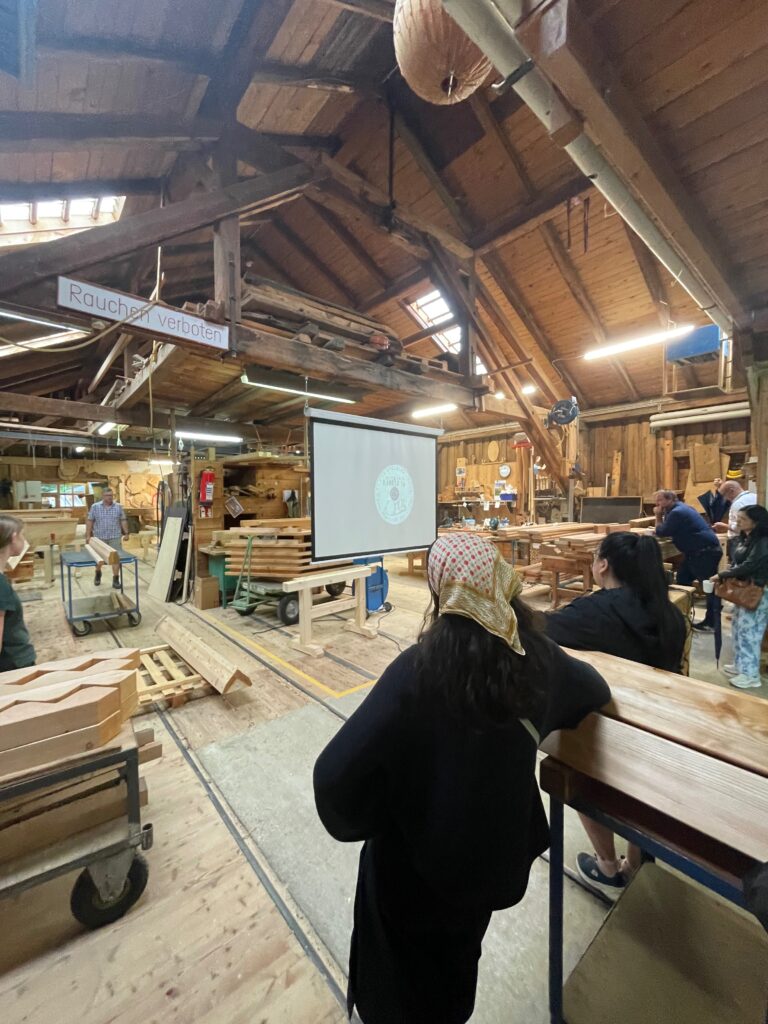
Our time in Munich ended with a visit to the Richter Spielgeräte offices and workshops, where we learnt more about the origins and philosophy behind their approach to play design. Seeing the craftsmanship and thought that goes into their equipment provided a valuable insight into the relationship between material, design and experience.
We then put some of the ideas from the trip into practice through a workshop. Working in small groups, we were given a design challenge and asked to create indicative 3D play environments using a simple timber frame and kinetic sand.
It was a fun and surprisingly effective way of testing some of the ideas we had been discussing. Using the kinetic sand, we could quickly shape topography, routes, spaces and play opportunities, experimenting with different levels of challenge, interaction and inclusivity.
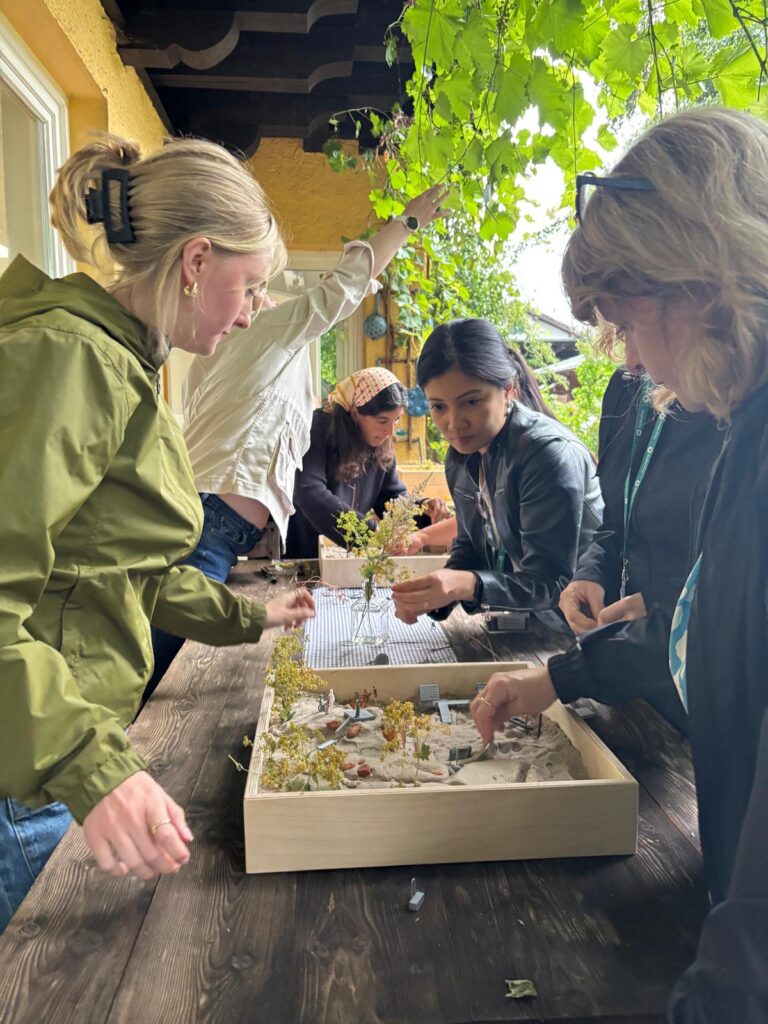
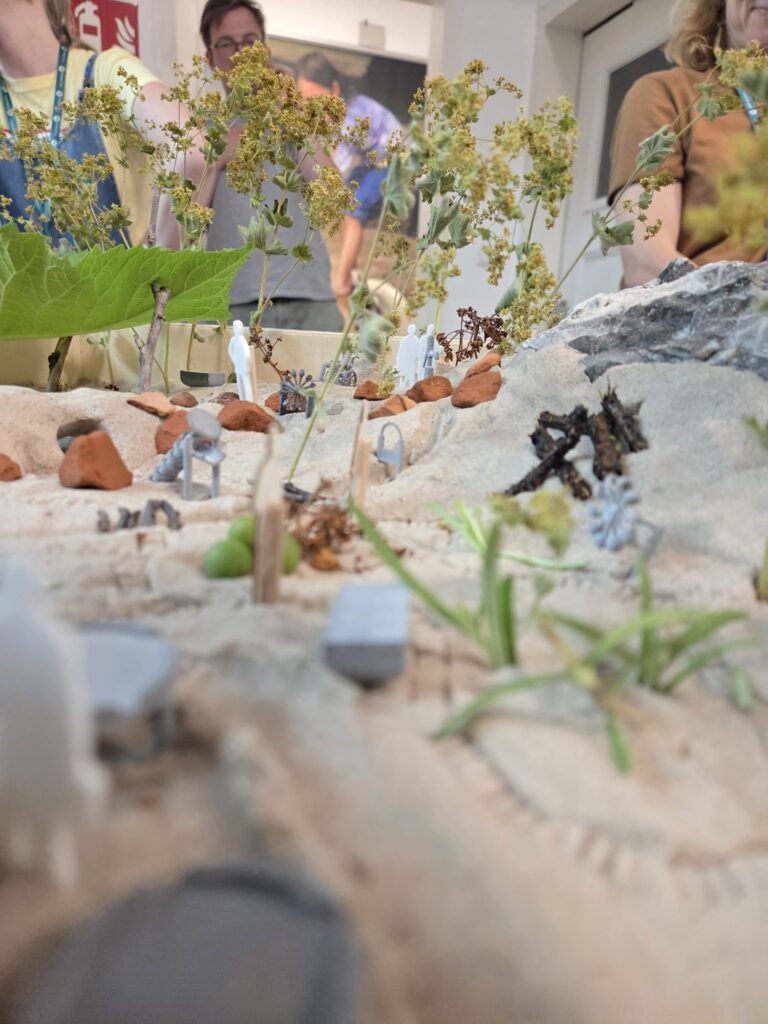
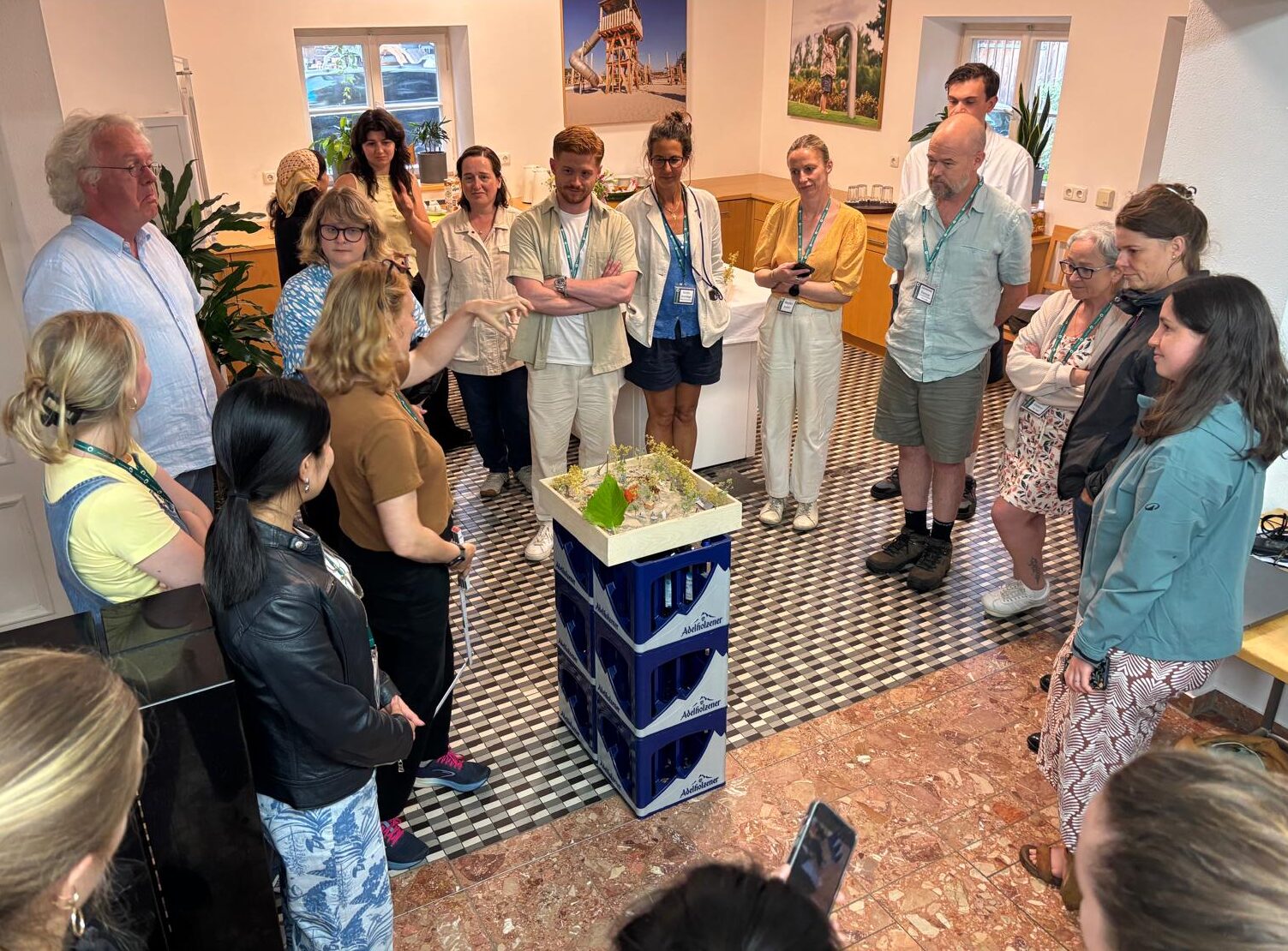
For me, this was a fitting way to finish the trip. We had spent the previous few days talking about risk, inclusion, materials, water and the importance of landscape in play, and the workshop gave us the opportunity to bring all of those ideas together through design.
I came away from Munich with plenty of ideas, but also a renewed appreciation for the importance of play within landscape design – and a slightly greater appreciation for Bavarian schnapps!
Big thanks to Timberplay for hosting such an insightful trip, focusing on play design.