Author: Maria Zouroudi

Using StoryMaps to develop the vision for STEP at West Burton

We are delighted to announce that we’ve recently produced an online StoryMap, on behalf of UKAEA, to help develop the vision, enable discussions and influence early stage design for STEP (Spherical Tokamak for Energy Production) at West Burton, Bassetlaw, Nottinghamshire.

STEP is an ambitious UKAEA programme that aims to demonstrate the ability to generate net energy from fusion and explore its commercial viability, via the construction of a prototype fusion energy plant at West Burton campus. Given its size and complexity, the STEP project is expected to generate a significant number of job opportunities in construction, operations and in the supply chain. The facility is expected to attract a number of R&D and start-up companies to co-locate on the campus.
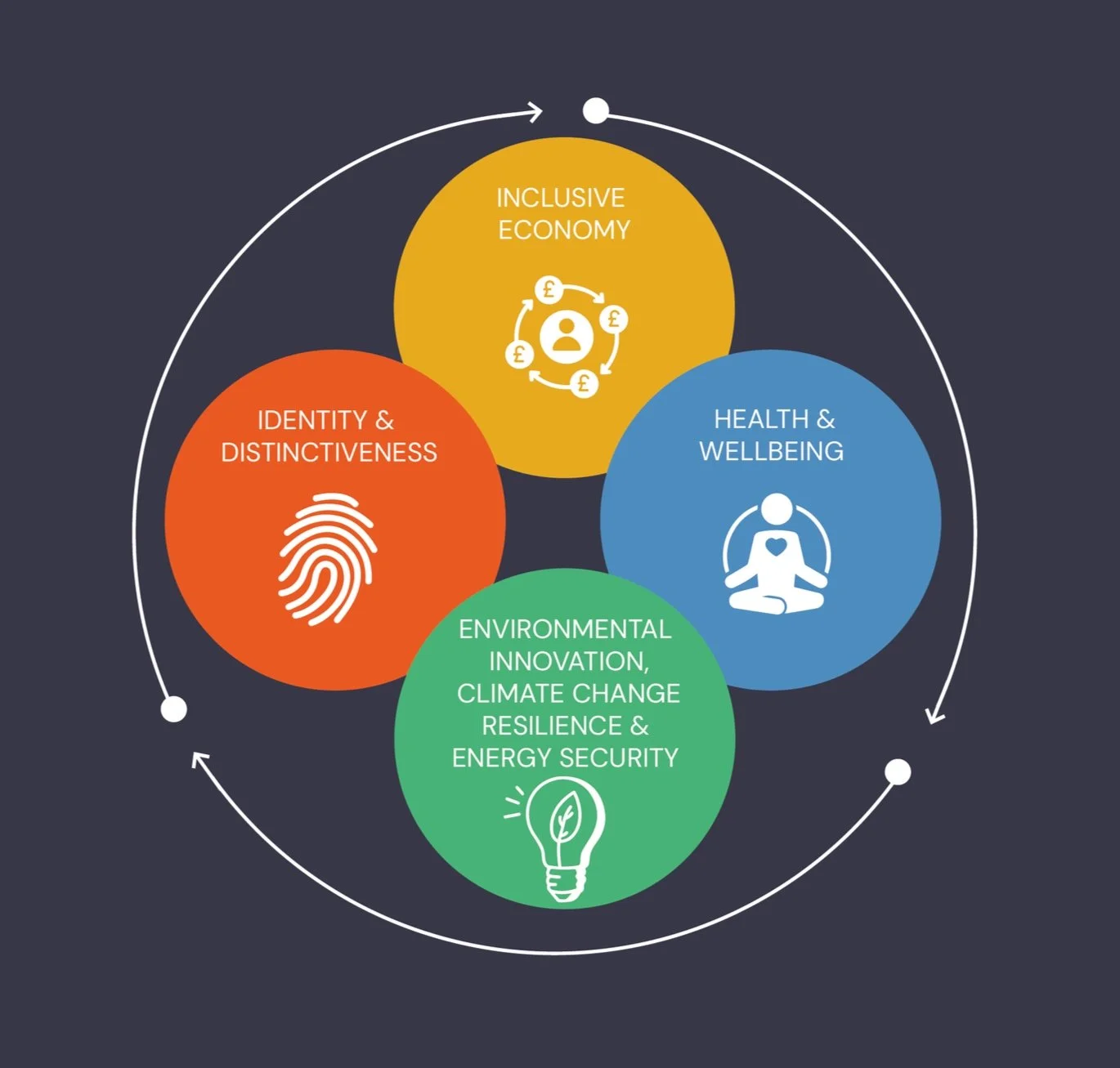
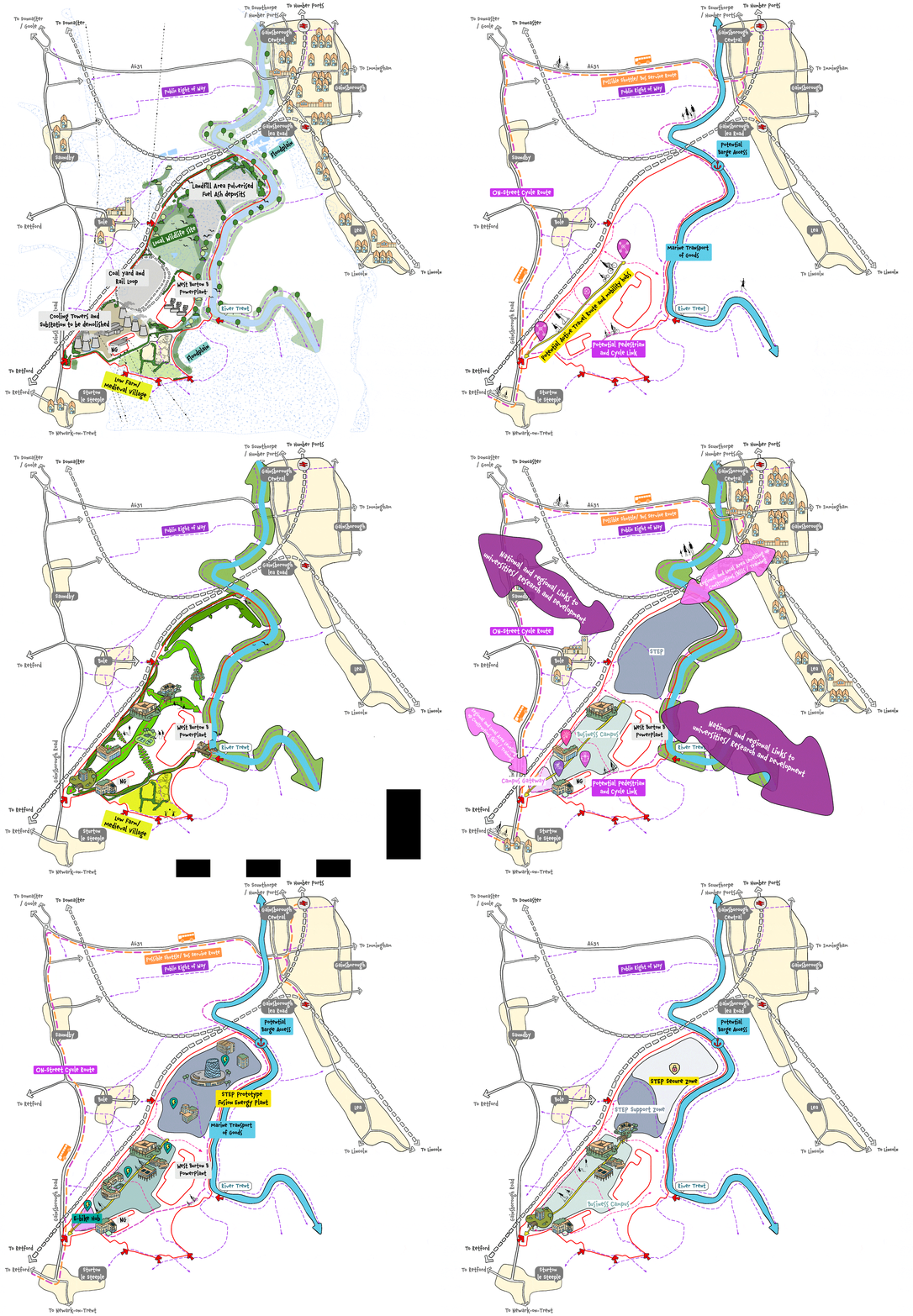
The journey through the StoryMap starts with an overview of fusion energy, the STEP programme, and the planning context, before providing a summary of the regional and local context of the site. It then identifies four thematic principles, that will support the vision for the West Burton campus, in line with national policy objectives and local ambitions. These are translated into eight spatial principles / sketchy illustrations that basically form the high level concept for the campus. Finally, the StoryMap touches on the evolution and likely phasing of the development.

The StoryMap has been created using ArcGIS stories and is a tool that offers a more user friendly and accessible alternative to the traditional, hard copy vision documents.

The above piece of work has now been published on UKAEA’s website and is currently being used for engagement purposes.
Appreciating the Social Value embedded in Co-housing

Last September we booked to attend a guided tour at Marmalade Lane, as part of our office study trip in Cambridge, seeking inspiration from UK best practice precedents. It was a unique opportunity to engage directly with local residents, listen to their stories and learn from their living experience and design involvement in a scheme that we’ve used regularly as a precedent in our work.

Marmalade Lane is an innovative, 42-home new co-housing community that forms part of the wider Orchard Park scheme in North Cambridge and is widely-regarded as a modern exemplar. It was developed following a collaborative design process and an innovative partnership between the Council, TOWN (the developer) and the future residents.

What makes the scheme unique, is the provision of high quality social infrastructure that encourages a more sociable way of life and contributes to wellbeing.

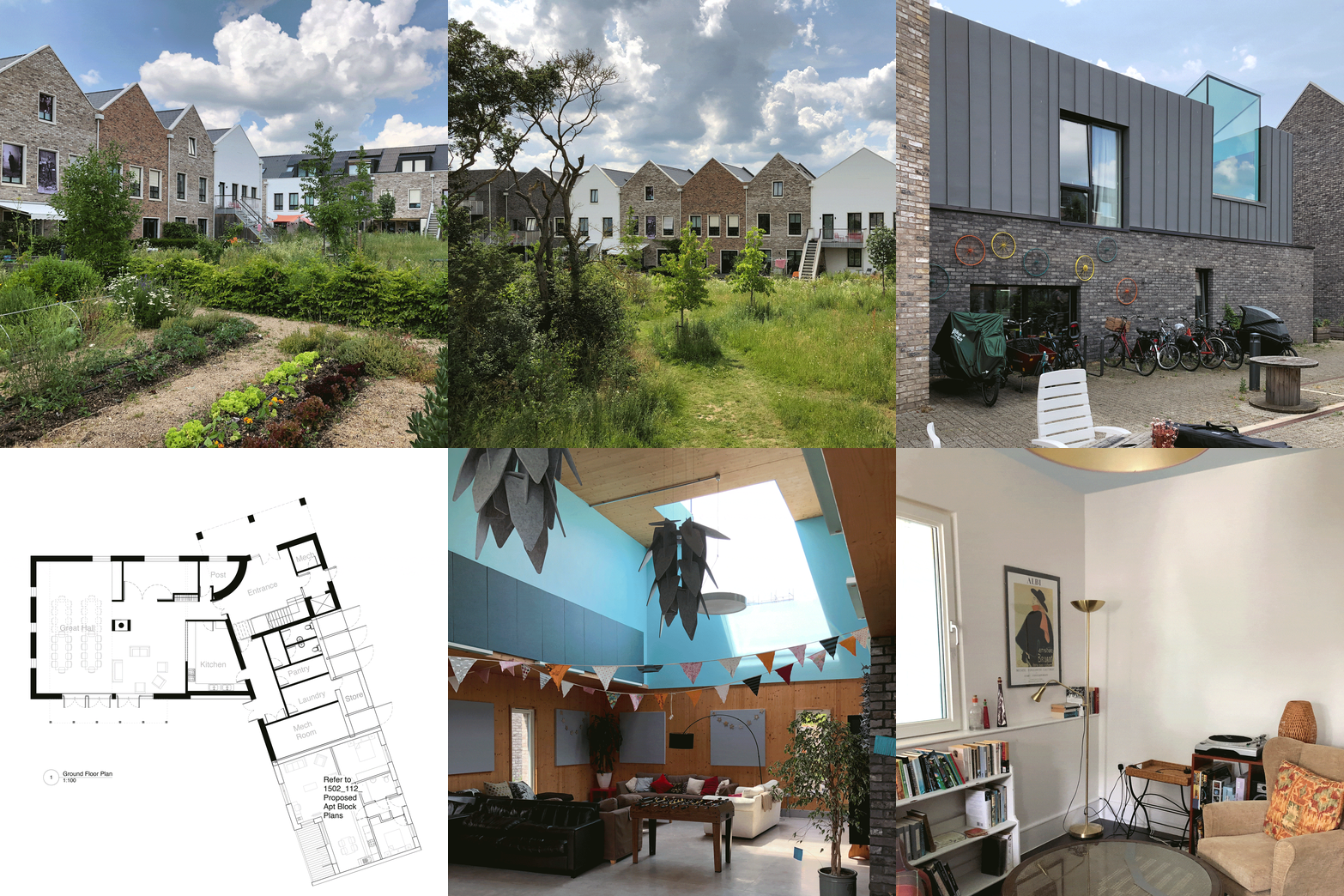
Residents have access to a wide range of shared spaces and facilities (such as the common house, the workshop / gym, the community shop, the shared gardens, the lane) and an active role in the onward management, use and maintenance of them. All of the residents are members of ‘Cambridge Co-housing Limited’ and have a stake in the running of common parts of the scheme which they also financially contribute to through an annual service charge. Many of the residents have been involved in the design and planning process from the outset which reinforces the sense of ownership of the place they live in and engage with, as well as a shared responsibility towards the long-term maintenance and improvement of its infrastructure and assets.

Marmalade Lane follows an innovative housing model, where private space gives way to community space with high social value and significant environmental benefits. A car-club and shared cargo bike scheme are provided to contribute to a reduction in private car ownership with reduced car parking, concentrated on the periphery to make space for people-focused public realm accommodating play, food growing, sustainable urban drainage, water collection, compost and space for intergenerational gatherings at the heart of the scheme. Small private gardens with low fences lead to a more sociable way of life between neighbours that encourage more time being spent in shared spaces. Guest bedrooms for visiting friends and relatives in the common house reduce the need for having a spare room at home and the common dinning room, kitchen, laundry room, play rooms and space for working reduce the spatial requirements of the private homes.

One of the most fascinating aspects of the project is the way it has evolved and continues evolving over time, addressing people’s ever-changing needs. For example, during the COVID-19 pandemic, the urgent need for robust social support systems led to the partial conversion of a storage area that wasn’t used into a community shop that became the main generator of social interaction between the residents.

There is definitely a lot to learn from Marmalade Lane. The community led approach applied here is forming a source of inspiration for community hubs and long-term stewardship models in a wide range of our current projects. There is a real value embedded in social infrastructure and responsive design, especially when the community spirit and sense of ownership have the power to stand the test of time, beat loneliness and result in better placemaking.